Operating Expense Ratios Below 30%: A Data-Driven Approach for Self-Storage
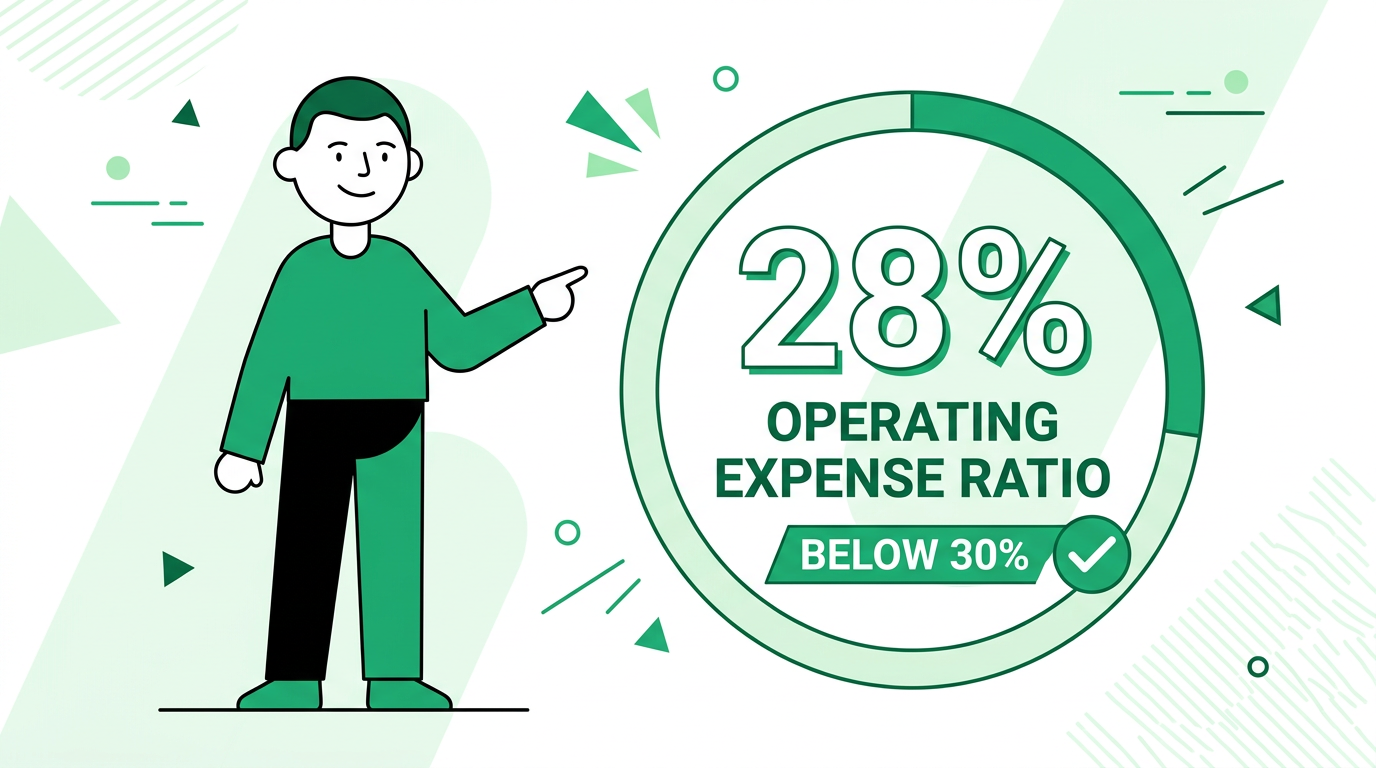
A 35% operating expense ratio vs. a 28% OER is the difference between an okay asset and a prime one. On $10M in revenue, that 7-point gap is $700K in NOI. Here’s how to close it with data and technology.
What Counts as Operating Expense
OER = Operating Expenses ÷ Gross Revenue.
Operating expenses typically include: payroll (onsite and regional), utilities, property taxes, insurance, repairs & maintenance, marketing, and general/admin. Capital improvements (CapEx) are excluded.
The goal: drive OER down while maintaining (or improving) revenue and tenant experience. Cut fat, not muscle.
The Biggest Levers
1. Labor (30-40% of OpEx)
The opportunity: Self-storage is labor-light compared to multifamily, but you still have managers, regional supervisors, and back-office staff. Technology can reduce all three.
Tactics:
- Remote management: Facilities with keypad/kiosk access can run without onsite managers. Some operators run 10+ locations per regional supervisor.
- Automation: Automated reporting and dashboards eliminate or reduce analyst/CFO headcount.
- Consolidation: Merge smaller facilities under one manager. Use technology to monitor from a distance.
Target: 15-20% of revenue on labor for stabilized portfolios. If you’re at 25%, you have room.
2. Repairs & Maintenance (10-15% of OpEx)
The opportunity: Reactive maintenance is expensive. Preventive maintenance and vendor consolidation are cheaper.
Tactics:
- CMMS or tracking: Know what you’re spending, where, and on what. CapEx and repair tracking by location surfaces waste.
- Vendor consolidation: Fewer vendors, better rates. Negotiate from a position of volume.
- Preventive schedules: Roof, HVAC, paving—maintain before failure. Data helps you prioritize.
3. Marketing (5-10% of OpEx)
The opportunity: Blasted, undifferentiated spend wastes money. Targeted spend by location and channel performs better.
Tactics:
- Track cost per lease by location and channel. Double down on what works.
- Use market intelligence to avoid overspending in supply-constrained markets.
- Test and iterate. Digital channels (Google, Facebook) are measurable. Traditional (billboards, flyers) often aren’t—question them.
4. Utilities (5-10% of OpEx)
The opportunity: LED lighting, smart thermostats, and occupancy-based controls can cut utility spend 15-25%.
Tactics: CapEx upgrade. ROI typically 2-4 years. Prioritize high-usage facilities first.
5. Back-Office / G&A (5-15% of OpEx)
The opportunity: This is where automation pays fastest. Reporting, analysis, and compliance can be automated or outsourced.
Tactics: Replace manual reporting with automated dashboards and reports. Use fractional CFO/compliance where full-time isn’t justified.
The Data Requirement
You can’t optimize what you can’t measure. To drive OER down, you need:
- Expense breakdown by category and location — Not just totals. Drill into R&M, labor, marketing by site.
- Trend visibility — Is OER improving or worsening? By location?
- Benchmarks — How do you compare to your own best locations? To market?
That requires a single source of truth—a platform that aggregates PMS data, expense data, and operational metrics. Spreadsheets won’t scale.
The 30% Target
Sub-30% OER is achievable for well-run, stabilized self-storage portfolios. It requires:
- Labor efficiency (remote management, automation)
- Vendor discipline (consolidation, negotiation)
- Marketing optimization (data-driven allocation)
- Back-office automation (reporting, analysis)
- Continuous visibility (dashboards, alerts)
The operators who get there aren’t magic. They’re systematic. And they have the tools to see exactly where every dollar goes.