From Acquisition to Optimization: The PE Operator's Self-Storage Tech Stack
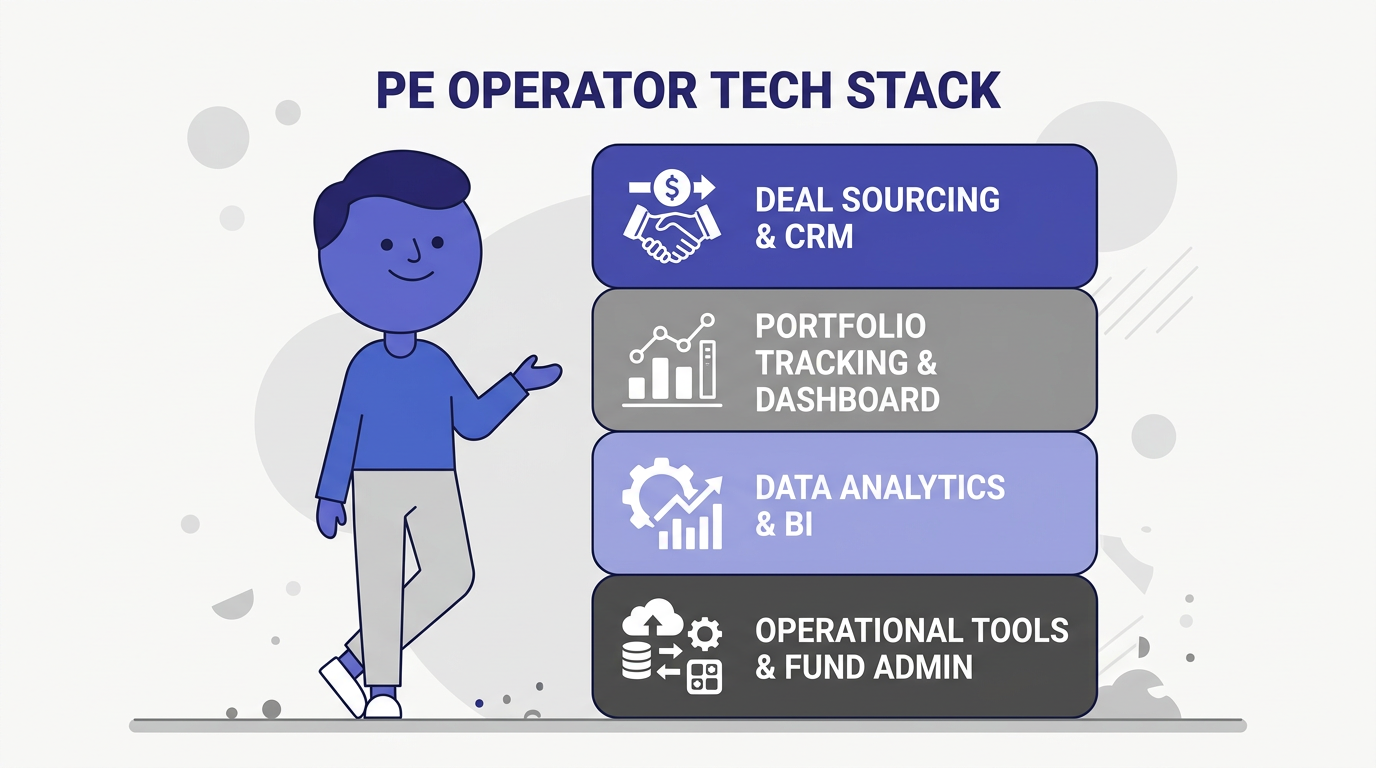
The self-storage tech stack has evolved. Ten years ago, a property management system (PMS) and Excel were enough. Today, top PE operators run a layered stack that spans acquisition, operations, and disposition. Here’s the map.
Layer 1: Property Management System (PMS)
Purpose: Daily operations—leases, payments, access control, unit management.
Options: Yardi, SiteLink, StorEDGE, QuikStor, and others. Pick one and standardize. Running multiple PMSs across a portfolio creates reporting hell.
Key: Ensure your PMS has an API or export capability. You’ll need to feed data to everything else.
Layer 2: Operational Intelligence / BI
Purpose: Aggregate data from PMS (and other sources), visualize it, generate reports.
What you need:
- Real-time dashboards (occupancy, revenue, delinquency, by location)
- Automated investor reporting (weekly, monthly, quarterly)
- Alerts (delinquency spikes, occupancy drops, variance flags)
- Acquisition underwriting: Upload a rent roll, get NOI projection
Old way: Build in-house with analysts and engineers. Cost: $300K+/year. New way: Use a purpose-built platform. Cost: fraction of one FTE.
Layer 3: Pricing / Revenue Management
Purpose: Optimize rates by unit type and location. Maximize RevPAU.
Options: Dedicated revenue management tools, or modules within your BI platform. AI-driven dynamic pricing is now table stakes for top operators.
Key: Must integrate with PMS for rate application and with BI for visibility.
Layer 4: Market Intelligence
Purpose: Comp analysis, street rate tracking, competitive positioning.
Options: Standalone tools or integrated into BI. Automated comp tracking saves analyst time and improves decision quality.
Layer 5: CapEx / Asset Management
Purpose: Track maintenance, repairs, and capital improvements. Know where the money goes.
Options: CMMS (computerized maintenance management), or built-in to your BI platform. Key is visibility by location and project type.
The Integration Imperative
The stack only works if the layers talk to each other. PMS → BI is non-negotiable. Pricing and market intel should feed the same dashboard. Avoid point solutions that create new data silos. Consolidate where possible—one platform that does reporting, pricing, and market intel beats three that don’t integrate.
Acquisition Checklist
When you’re underwriting a new facility, your stack should support:
- Rent roll upload → NOI projection
- Comp analysis for the market
- Unit mix and occupancy benchmark
- CapEx assumption tracking
If you’re still doing this in Excel, you’re behind.
The End-State Stack
| Function | Tool | Cost (approx) |
|---|---|---|
| Operations | PMS (Yardi, SiteLink, etc.) | Per location |
| Intelligence | Clutter IQ or similar | $30K-$80K/year |
| Pricing | Integrated or standalone | Often bundled |
| Market intel | Integrated or standalone | Often bundled |
Total incremental cost for the “intelligence” layer: less than one analyst. Total value: replaces multiple FTEs and improves decision quality across the portfolio. The ROI is obvious. The operators who get this right will consolidate faster and exit at better multiples.